
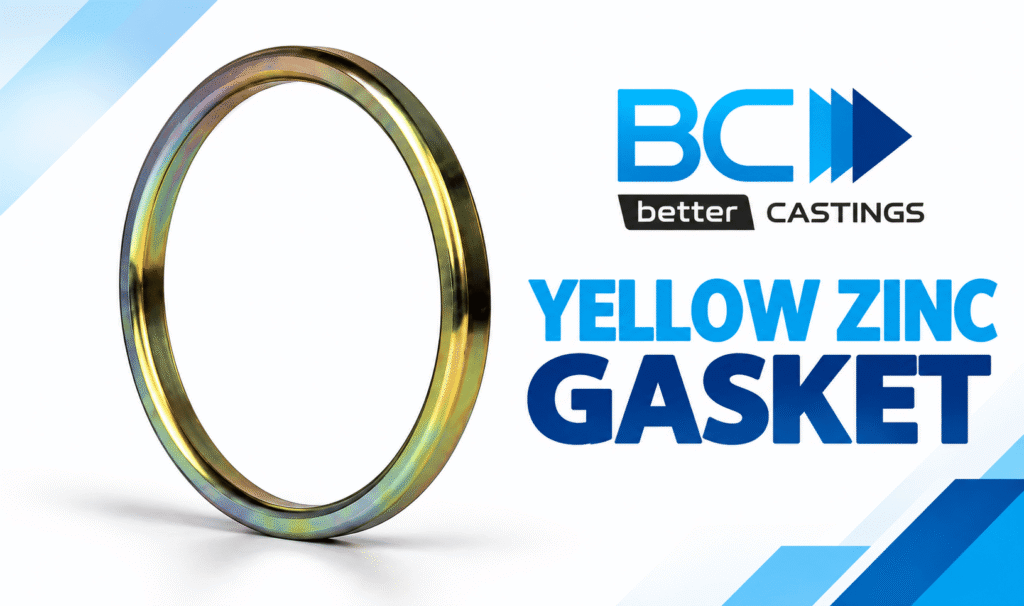
Yellow zinc gaskets are metal sealing components with a zinc-based protective coating designed to improve resistance to atmospheric corrosion. The yellow finish is generally associated with a supplementary conversion treatment applied over the zinc coating. The gasket itself may be manufactured from steel or another specified metal, so the base material remains an important part of the overall gasket specification.
Yellow zinc gaskets are used in industrial and mechanical applications where reliable sealing and surface protection are required. Their suitability depends on factors such as gasket design, material, dimensions, coating requirements, operating temperature, pressure, and environmental exposure. Understanding these factors helps engineers and purchasing teams select a gasket that matches the requirements of the intended application.
KEY BENEFITS OF YELLOW ZINC GASKETS
The primary benefit of yellow zinc gaskets is improved protection of suitable ferrous surfaces against atmospheric corrosion. Zinc forms a protective coating over the underlying metal, while the supplementary finish can provide additional surface protection. ASTM B633 specifies requirements for electrodeposited zinc coatings on iron and steel, including coating thickness, adhesion, appearance, and corrosion resistance.
Yellow zinc can also provide a recognizable surface finish that helps distinguish coated components during inspection, storage, and installation. This can be useful in facilities where different coating systems or material specifications are used.
Key benefits include:
- Corrosion protection: Helps protect suitable steel surfaces from atmospheric exposure.
- Recognizable finish: The yellow appearance can help identify coated components.
- Controlled coating: Properly specified plating provides defined coating requirements.
- Storage protection: Helps reduce surface oxidation during normal handling and storage.
However, coating performance depends on the coating specification, substrate, environment, and handling. Yellow zinc should therefore be selected as part of a complete gasket specification rather than treated as a universal corrosion solution.
COMMON APPLICATIONS OF YELLOW ZINC GASKETS
Yellow zinc gaskets can be considered for industrial applications where a metal sealing component requires surface protection against atmospheric moisture and handling-related corrosion. The appropriate gasket design, material, dimensions, coating, pressure rating, and temperature range must still be established for each application.
Potential applications include industrial piping assemblies, valve connections, pumps, mechanical equipment, and other bolted joints where a coated metal gasket is appropriate. In demanding industries such as oil and gas, the gasket must also comply with the relevant equipment and sealing requirements rather than being selected solely because it has a yellow zinc finish.
Typical application areas include:
- Industrial piping: Helps protect suitable exposed metal surfaces.
- Valve assemblies: Provides additional surface protection during storage and handling.
- Mechanical equipment: Can help limit surface oxidation on appropriate components.
- Oil and gas equipment: May be specified where the gasket design and coating requirements permit.
- General engineering: Provides a recognizable protective surface finish.
Better Castings manufactures multiple industrial gasket types and lists yellow zinc among its coating options for selected gasket products. The coating should always be considered alongside the gasket material and service requirements.
YELLOW ZINC GASKET SPECIFICATIONS AND STANDARDS
A yellow zinc gasket specification should identify both the gasket requirements and the coating requirements. Gasket specifications may define the material, dimensions, profile, hardness, and applicable design standard, while the coating specification establishes the zinc deposition and supplementary finish.
ASTM B633-23 covers electrodeposited zinc coatings applied to iron and steel for corrosion protection. The specification addresses coating thickness classes, supplementary finishes, appearance, adhesion, corrosion resistance, and hydrogen-embrittlement-related processing considerations. It also notes that specific fastener specifications may be more appropriate when the component is a mechanical fastener.
For yellow zinc gaskets, the purchasing specification should consider:
- Base material and grade
- Gasket type and dimensions
- Zinc coating requirement
- Coating thickness
- Supplementary conversion or passivation finish
- Corrosion-resistance requirement
- Applicable API, ASME, ASTM, or customer specification
- Inspection and documentation requirements
The exact coating standard should be confirmed with the manufacturer and matched to the actual gasket construction and application. Avoid specifying a coating simply by color because similar appearances can result from different coating systems.
HOW YELLOW ZINC GASKETS PROVIDE CORROSION PROTECTION
Yellow zinc gaskets rely on the protective properties of the zinc coating to help reduce corrosion of a suitable underlying metal surface. The zinc separates the substrate from direct exposure to atmospheric conditions, while zinc can also provide sacrificial protection when the coating is locally damaged under suitable electrochemical conditions.
The supplementary conversion finish can provide another level of surface protection. The yellow or iridescent appearance is associated with certain conversion finishes, but color alone does not establish the exact coating chemistry or corrosion performance.
Several factors influence how effectively the coating performs:
- Coating thickness: The specified zinc thickness affects the amount of protective coating available.
- Surface preparation: Proper preparation supports coating adhesion and consistency.
- Conversion treatment: The supplementary finish influences surface protection.
- Environment: Humidity, salts, chemicals, temperature, and abrasion can accelerate deterioration.
- Mechanical damage: Scratches or deformation can expose the underlying substrate.
ASTM B633 includes requirements related to coating thickness, adhesion, corrosion resistance, and processing. Therefore, yellow zinc should be selected according to the actual exposure environment and engineering requirements, not simply because of its appearance.
YELLOW ZINC GASKETS VS PLAIN STEEL GASKETS
The main difference between yellow zinc gaskets and plain steel gaskets is the protective surface treatment. A plain steel gasket without a protective coating leaves the steel substrate more directly exposed to atmospheric conditions. A yellow zinc gasket has a zinc-based coating and supplementary finish intended to provide additional surface protection.
This difference can matter during transportation, warehouse storage, installation, and service in environments where moisture or atmospheric exposure may contribute to corrosion.
| FEATURE | YELLOW ZINC GASKET | PLAIN STEEL GASKET |
|---|---|---|
| Zinc coating | Yes | No |
| Yellow finish | Typically present | No |
| Surface corrosion protection | Provided by coating | No zinc coating |
| Visual identification | Easy to distinguish | Generally limited |
| Coating specification | Required | Not applicable |
However, yellow zinc does not automatically make a gasket suitable for every environment. Highly corrosive chemicals, elevated temperatures, abrasion, or specialized process conditions may require another material or coating system.
The correct selection should therefore consider the complete gasket construction, including base material, coating, dimensions, operating conditions, and applicable standard.
FACTORS TO CONSIDER WHEN CHOOSING YELLOW ZINC GASKETS
Choosing yellow zinc gaskets requires more than specifying a yellow surface finish. The gasket must be compatible with the mechanical, thermal, chemical, and environmental conditions of the application.
Begin with the gasket type and dimensions. Outside diameter, inside diameter, thickness, profile, and sealing geometry must match the mating components. For standardized flange applications, the applicable API or ASME requirements should be confirmed before ordering.
The base material is equally important because zinc is a surface treatment rather than the primary gasket material. The substrate determines important mechanical and temperature-related properties, while the coating specification addresses surface protection.
Before purchasing, consider:
- Operating pressure and temperature
- Process-fluid compatibility
- Humidity and atmospheric exposure
- Salt or marine conditions
- Required coating thickness
- Corrosion-resistance requirements
- Gasket dimensions and tolerances
- Applicable API, ASME, ASTM, or customer requirements
- Inspection and traceability requirements
- Storage and transportation conditions
Installation also matters. Scraping, excessive handling, or deformation can damage a protective coating. For critical applications, provide the manufacturer with the complete gasket and coating specification so the requirements can be reviewed before production.
WHY CHOOSE BETTER CASTINGS FOR YELLOW ZINC GASKETS?
Better Castings manufactures industrial sealing products including gaskets and other engineered components for sectors such as oil and gas, petrochemical, and industrial applications. Its published information identifies gasket manufacturing capabilities and lists yellow zinc among the coating and plating options available for selected gasket products.
The company also describes in-house quality-control capabilities that include material analysis, hardness testing, ultrasonic testing, surface-roughness measurement, coating-thickness measurement, and dimensional inspection equipment. These capabilities can support quality verification across different stages of manufacturing.
For a yellow zinc gasket requirement, customers should provide the gasket type, dimensions, base material, coating requirement, operating conditions, applicable standard, and quantity. This information allows the manufacturer to establish the appropriate product specification instead of treating the yellow finish as the only requirement.
For industrial applications where coating performance, dimensional accuracy, and documentation matter, a complete specification provides a clearer basis for manufacturing and inspection. Better Castings can evaluate the stated gasket and coating requirements according to the requested application and product configuration.
FREQUENTLY ASKED QUESTIONS ABOUT YELLOW ZINC GASKETS
WHAT ARE YELLOW ZINC GASKETS USED FOR?
Yellow zinc gaskets are used in industrial and mechanical sealing applications where a metal gasket also needs additional surface protection against atmospheric moisture and corrosion.
ARE YELLOW ZINC GASKETS CORROSION RESISTANT?
Yes. The zinc coating helps protect the underlying metal from atmospheric corrosion, while the supplementary finish can provide additional surface protection. Performance depends on the coating and service environment.
WHAT MATERIAL ARE YELLOW ZINC GASKETS MADE FROM?
Yellow zinc describes the surface coating rather than the gasket’s base material. The underlying gasket may be manufactured from steel or another specified metal depending on the application and required specifications.
HOW DO YELLOW ZINC GASKETS DIFFER FROM PLAIN STEEL GASKETS?
Yellow zinc gaskets have a zinc-based protective coating, while plain steel gaskets generally do not. The coating provides additional surface protection and gives the component its recognizable yellow finish.
WHERE ARE YELLOW ZINC GASKETS COMMONLY USED?
They can be used in industrial piping, valves, pumps, mechanical equipment, and other bolted assemblies where a coated metal gasket is suitable for the operating conditions.
WHAT SHOULD I CONSIDER WHEN BUYING YELLOW ZINC GASKETS?
Consider the gasket type, dimensions, base material, operating pressure and temperature, process-fluid compatibility, coating requirements, corrosion exposure, and applicable API, ASME, ASTM, or customer specifications.
DO YELLOW ZINC GASKETS MEET ASTM STANDARDS?
The applicable standard depends on the gasket and coating specification. ASTM B633 covers electrodeposited zinc coatings on iron and steel, while the complete gasket should also meet the relevant product or application requirements.
CAN I ORDER CUSTOM YELLOW ZINC GASKETS FROM BETTER CASTINGS?
Yes, requirements can be specified according to the gasket type, dimensions, base material, coating, operating conditions, applicable standard, and quantity. Providing complete specifications helps establish the correct product configuration.
ABOUT THE AUTHOR
Girish is an SEO specialist at Webrocket who focuses on search engine optimization (SEO), answer engine optimization (AEO) and generative engine optimization (GEO). He creates clear, well-structured content that ranks on Google and gets cited in AI-powered search results, including Google AI Overviews, ChatGPT, Gemini and Perplexity.
