
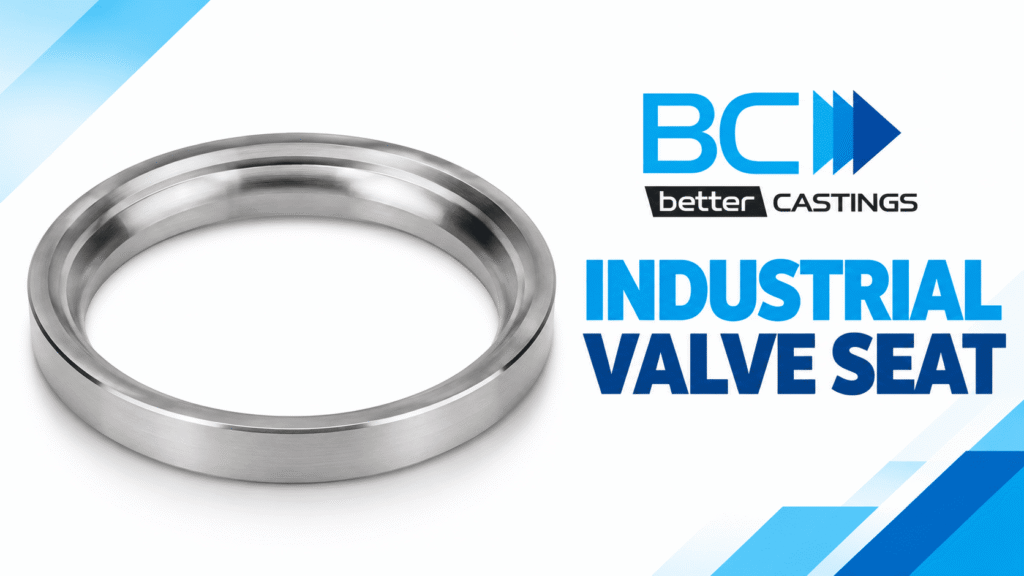
Valve seats play a critical role in the sealing performance of industrial valves. When a valve closes, the seat forms the sealing interface with the closure element, helping control leakage through the valve.
Seat design, material selection, surface finish, and operating conditions all influence sealing performance and service life. A poorly selected or damaged seat can cause leakage, reduce process efficiency, and increase maintenance requirements.
Understanding how valve seats work helps engineers, maintenance teams, and procurement professionals select suitable components for their applications. This guide explains the main types of valve seats, commonly used materials, manufacturing processes, potential failure causes, and the factors to consider when choosing an industrial valve seat.
WHAT ARE VALVE SEATS?
DEFINITION OF A VALVE SEAT
A valve seat is the stationary sealing surface inside a valve against which the moving closure element rests when the valve closes. Depending on the valve design, the closure element may be a disc, plug, gate, ball, or needle.
The seat can be machined directly into the valve body or manufactured as a separate ring fitted inside the body. Its primary function is to help restrict fluid flow when the valve reaches its closed position.
Valve seats must withstand operating pressure, temperature changes, fluid exposure, and repeated opening and closing cycles. Their dimensions and surface finish directly affect the valve’s ability to achieve the required shut-off performance.
WHAT IS THE MAIN FUNCTION OF A VALVE SEAT?
The primary function of a valve seat is to help prevent unwanted flow when the valve is closed. It provides a defined sealing surface that works with the closure element to restrict leakage.
In globe and control valves, the relationship between the seat and plug also influences flow characteristics as the valve opens and closes. In isolation valves, the seat must provide the sealing performance required when the valve is fully closed.
A properly selected seat can improve sealing reliability and reduce wear. Its performance also depends on the valve design, mating surfaces, material compatibility, and operating conditions.
WHERE ARE VALVE SEATS LOCATED?
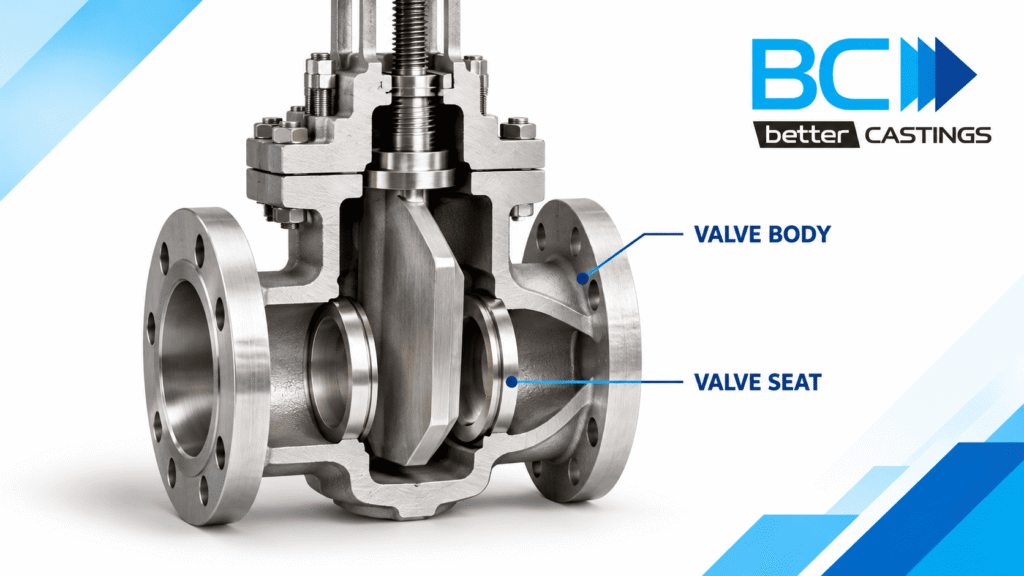
The location and design of a valve seat depend on the valve type.
| Valve Type | Closure Element | Typical Seat Location |
|---|---|---|
| Gate valve | Gate or wedge | Seat rings positioned on either side of the gate |
| Globe valve | Disc or plug | Around the body port where the closure element meets the seat |
| Ball valve | Ball | Seat rings positioned around the ball |
| Check valve | Disc, flap, or ball | Around the flow opening that the closure element closes |
| Needle valve | Tapered needle | At the body orifice against which the needle closes |
| Butterfly valve | Disc | Around the body bore, often using a liner or seat ring |
WHAT HAPPENS WHEN A VALVE SEAT FAILS?
A damaged seat may allow fluid to pass through a valve even when it is fully closed. This condition is commonly called seat leakage or valve passing.
The consequences depend on the application. Leakage can reduce flow-control accuracy, waste product, increase energy consumption, and compromise isolation.
A small leak can also expose the seating surface to high-velocity fluid, creating grooves that increase leakage over time. In critical systems, seat condition is especially important because reliable isolation may be necessary for safe maintenance.
HOW DO VALVE SEATS WORK?
THE VALVE CLOSING PROCESS
When an operator turns a handwheel or activates an actuator, the valve stem moves the closure element toward the seat. As the two surfaces meet, the closing force helps establish the contact needed to restrict flow.
The force acting on the seat depends on the valve design. It may come from the actuator, fluid pressure, or a combination of both.
For example, a floating ball valve can use line pressure to push the ball against the downstream seat. In a globe valve, stem force presses the disc or plug against the seat. Other designs use different arrangements to achieve the required sealing performance.
The seat and closure element must maintain suitable contact without suffering excessive deformation, wear, or damage.
HOW DOES A VALVE SEAT PREVENT LEAKAGE?
Machined surfaces contain small irregularities. When two surfaces meet, these irregularities can leave microscopic paths through which fluid may escape.
Soft seats use polymers or elastomers that can deform against the mating surface. This helps close small gaps and can provide very low leakage when the valve is designed for that performance.
Metal seats rely more heavily on accurate geometry, surface finish, contact pressure, and suitable material combinations. Scratches, trapped particles, damaged sealing edges, or alignment problems can interfere with surface contact and create a leak path.
HOW DO PRESSURE AND TEMPERATURE AFFECT PERFORMANCE?
Pressure affects the load between the seat and closure element. Excessive differential pressure can create challenging operating conditions, potentially increasing wear or deforming certain seat materials.
Temperature affects materials differently. Polymers and elastomers may soften, creep, harden, or lose compatibility outside their intended operating range. Metals expand when heated, and differences in thermal expansion between the seat and valve body can affect the fit.
Engineers should evaluate the seat’s pressure-temperature limits alongside the rating of the complete valve.
WHY IS SURFACE FINISH IMPORTANT?
Surface finish influences how closely the seat and closure element contact each other. Scratches, roughness, or uneven geometry can leave leakage paths, particularly in metal-to-metal sealing arrangements.
Manufacturing processes such as finish grinding and lapping may be used to achieve the surface condition required by the design. Dimensional accuracy is equally important: a finely finished seat can still perform poorly if its seating face is out of round, misaligned, or machined to the wrong angle.
WHAT ARE THE DIFFERENT TYPES OF VALVE SEATS?
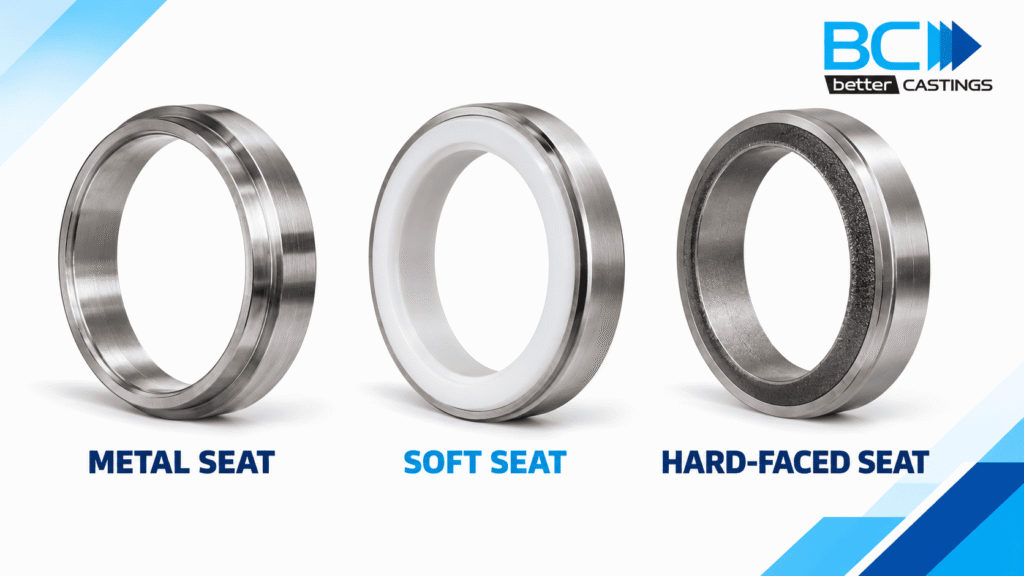
Valve seats can be classified by their construction, sealing material, and surface treatment. These categories overlap, so one seat may belong to more than one group.
For example, a renewable seat ring may use stainless steel, a hard-faced metal surface, or a metal carrier with a polymer insert.
INTEGRAL VALVE SEATS
An integral valve seat is formed as part of the valve body rather than manufactured as a separate replaceable ring. Its sealing surface is machined directly into the body or created using a suitable surface treatment.
This construction eliminates the separate seat-to-body joint. However, repairing an integral seat may require machining or lapping inside the valve body. If the damage is extensive, repair may not be practical.
REPLACEABLE OR RENEWABLE VALVE SEATS
A renewable valve seat is a separate component installed inside the valve body. Depending on the design, it may be retained by threads, a press fit, a retainer, welding, or another approved arrangement.
The main advantage is maintainability. When the seat wears or becomes damaged, technicians may be able to replace the ring without replacing the entire valve.
The seat-to-body interface must still be designed correctly to maintain fit, retention, and sealing performance.
METAL VALVE SEATS
Metal valve seats use metal-to-metal contact between the seat and closure element. They are commonly considered for applications involving high temperatures, abrasive particles, or demanding operating conditions.
Their performance depends on the material combination, seating geometry, hardness, surface finish, and service conditions. Metal seats do not automatically provide zero leakage; acceptable leakage depends on the valve design, specified test method, and required performance.
SOFT VALVE SEATS
Soft seats use polymers such as PTFE, reinforced PTFE, or other engineered materials selected for the application.
They can provide very low leakage when their material properties and design suit the service conditions. Soft seats are widely used in many ball and plug valve designs.
Their limitations include temperature restrictions, deformation under sustained loading, and potential damage from incompatible chemicals or abrasive particles.
RESILIENT VALVE SEATS
Resilient seats use elastomers such as EPDM, NBR, or FKM. These materials can deform under contact pressure and recover when the load is removed.
They are common in selected water applications and certain butterfly valves. Material selection is essential because each elastomer has different chemical compatibility and temperature limits.
SPECIALIZED AND HARD-FACED VALVE SEATS
Hard-facing involves applying a wear-resistant material to a selected surface. The treated surface is then finished to meet the required dimensions and sealing characteristics.
Depending on the design and service conditions, hard-facing can improve resistance to wear, galling, or erosion. Cobalt-based alloys, including Stellite-branded materials, are used in some industrial hard-facing applications. Other alloys and coating systems may be suitable for particular services.
The correct solution depends on the substrate material, operating temperature, fluid, pressure drop, and manufacturing requirements.
VALVE SEAT TYPES COMPARISON
| Seat Type | Main Advantage | Important Limitation |
|---|---|---|
| Integral | No separate seat-to-body joint | Repair may be difficult |
| Renewable | Easier replacement and maintenance | Requires suitable retention and sealing |
| Metal | Can suit demanding temperature and wear conditions | Requires accurate geometry and surface finish |
| Soft polymer | Can provide very low leakage in suitable service | Has temperature, pressure, and compatibility limits |
| Resilient elastomer | Flexible material supports sealing contact | Performance depends on the elastomer grade |
| Hard-faced | Can improve resistance to specific wear mechanisms | Additional processing may be required |
The most suitable type depends on the valve design and operating conditions rather than one universal ranking.
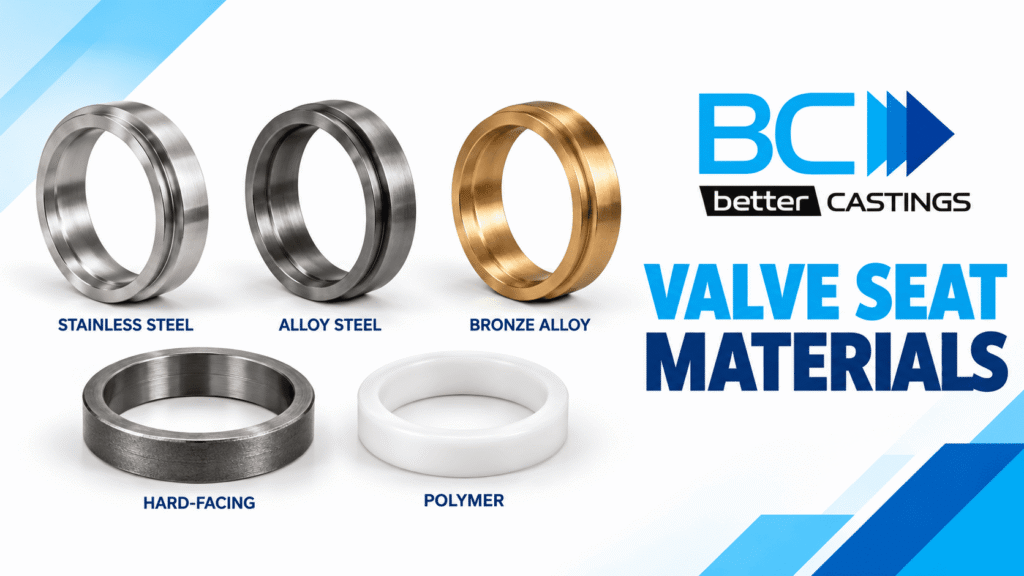
WHICH MATERIALS ARE USED FOR VALVE SEATS?
Material selection is a key part of valve seat design. The seat must provide a reliable sealing surface while resisting pressure, temperature, fluid exposure, and repeated contact.
Important: The properties below are general guidance, not universal operating limits. Actual suitability depends on the specific material grade, valve design, pressure, chemical environment, and operating conditions. Confirm applicable ratings with the valve manufacturer and material supplier.
STAINLESS STEEL
Stainless steel is widely used for metal valve seats because different grades offer combinations of strength, corrosion resistance, and machinability.
Some grades can be heat-treated to achieve higher hardness, while duplex and super duplex stainless steels may be considered for environments involving chlorides and seawater. The selected grade must meet both the process requirements and the required mechanical properties.
CARBON STEEL AND ALLOY STEEL
Carbon steel can be suitable where strength and cost are important and the fluid is not excessively corrosive.
Alloy steels offer properties suited to particular temperature, strength, or wear requirements. Some grades can be heat-treated to achieve specified mechanical properties. Selection should account for corrosion exposure, operating temperature, pressure, and required surface hardness.
BRONZE AND COPPER-BASED ALLOYS
Bronze and other copper-based alloys are used in selected water, marine, and utility applications. Some grades offer useful corrosion resistance and can reduce the tendency for galling when paired with appropriate materials.
They are not suitable for every chemical, pressure, or temperature condition. Compatibility must be evaluated for the actual application.
COBALT-BASED HARD-FACING ALLOYS
Cobalt-chromium-based alloys, including Stellite-branded materials, are used in some applications where resistance to wear, galling, and high-temperature service is important.
They may be applied to selected seating surfaces as an overlay and then machined or ground to the required finish. The appropriate alloy and application process depend on the substrate, service environment, and component specification.
PTFE AND REINFORCED PTFE
Polytetrafluoroethylene (PTFE) is widely used because of its chemical resistance and low friction. Reinforced or filled PTFE grades incorporate other materials to modify properties such as stiffness, wear resistance, and deformation under load.
These materials are used where their temperature, pressure, and chemical compatibility limits suit the application. Engineers should check the exact grade rather than assume all PTFE materials have identical performance.
ELASTOMERS
Common elastomers used in resilient seats include EPDM, NBR, and FKM.
- EPDM: Used in selected water and chemical applications, depending on the grade. It is generally unsuitable for many petroleum-based oils.
- NBR: Commonly selected for certain oil and fuel applications within its rated temperature range.
- FKM: Used in many hydrocarbon and chemical applications where the specific grade is compatible.
These descriptions are general. Actual fluid composition, concentration, temperature, and exposure conditions determine compatibility.
OTHER ENGINEERED POLYMERS
PEEK, nylon, and PCTFE are examples of engineered polymers used in selected industrial sealing applications.
Their mechanical properties, chemical resistance, and temperature capabilities vary by grade. Some may be considered when a conventional soft seat cannot meet the required stiffness, pressure, or temperature conditions.
The material should always be selected using the manufacturer’s technical data and the requirements of the complete valve assembly.
VALVE SEAT MATERIAL COMPARISON
| Material Group | Main Strengths | Important Considerations |
|---|---|---|
| Stainless steel | Corrosion resistance and mechanical strength | Grade selection and galling risk |
| Duplex and super duplex stainless steel | Strength and resistance to chloride-related corrosion | Grade, temperature, and fabrication requirements |
| Carbon and alloy steel | Strength and heat-treatment options | Corrosion resistance depends on the grade and environment |
| Bronze and copper alloys | Useful properties in selected water and marine services | Chemical compatibility and mechanical limits |
| Cobalt-based hard-facing | Resistance to selected wear mechanisms | Cost, application method, and finishing requirements |
| PTFE and reinforced PTFE | Low friction and chemical resistance | Temperature, pressure, and deformation limits |
| Engineered polymers | Grade-dependent stiffness and mechanical properties | Cost, compatibility, and design limits |
| EPDM, NBR, and FKM | Flexible sealing properties | Each grade has different compatibility limits |
HOW DO YOU CHOOSE BETWEEN METAL AND SOFT SEATS?
Start with the required leakage performance, then evaluate temperature, pressure, fluid compatibility, wear, and maintenance requirements.
A soft seat may be appropriate when its material is compatible with the process and its pressure-temperature limits meet the operating requirements. A metal seat may be more suitable for certain high-temperature, abrasive, or erosive services.
Neither option is automatically better for every application. The correct choice depends on the valve design, the process, and the required performance.
HOW ARE VALVE SEATS MANUFACTURED?
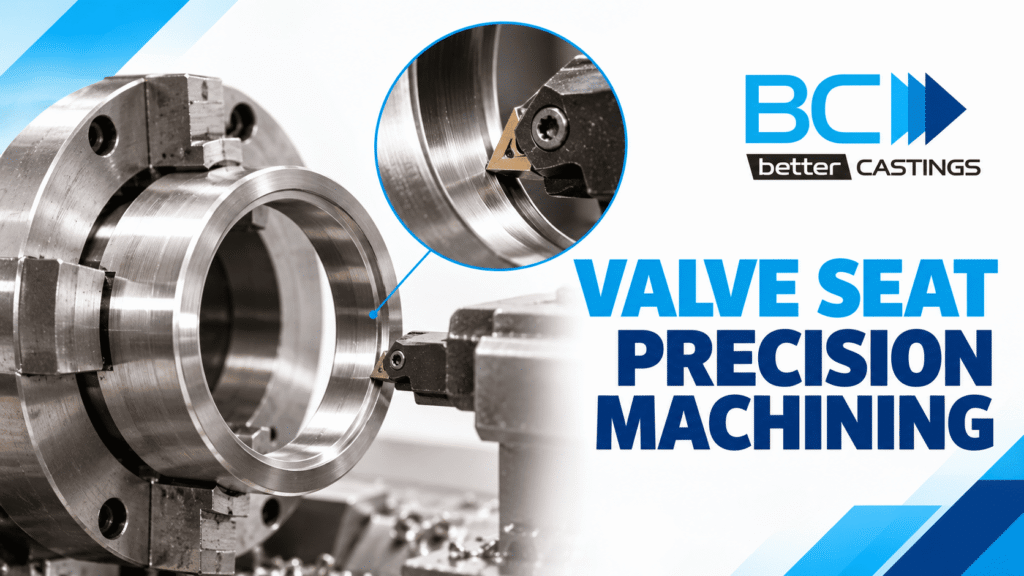
Valve seat manufacturing combines material selection, blank preparation, precision machining, finishing, and inspection. The exact process varies with the seat design, material, size, and service requirements.
ENGINEERING AND MATERIAL SELECTION
Manufacturing begins with a drawing or approved specification. It defines the seat’s dimensions, material grade, seating profile, tolerances, surface finish, and any specified hardness or surface treatment.
For replacement parts, the original OEM drawing or a verified dimensional assessment can help establish the required geometry.
The selected material must meet the mechanical and chemical requirements of the application. Material documentation helps verify the supplied grade and its specified properties. Additional checks, such as positive material identification, may be required by the project specification.
Better Castings states that it manufactures standard and custom valve seats according to customer drawings and OEM specifications.
FORGING, CASTING, AND BLANK PREPARATION
The appropriate starting material depends on the component design and specification.
Forging shapes metal through controlled deformation. Casting produces a component by solidifying molten material in a mould. Some components may also be machined from suitable bar stock.
These processes are not interchangeable in every application. The choice depends on material, geometry, mechanical requirements, production volume, and the approved manufacturing route.
Better Castings lists controlled forging and CNC machining among its valve seat manufacturing processes. Its broader manufacturing services also include centrifugal casting, but the required production route should be confirmed for the particular seat being ordered.
HEAT TREATMENT AND CNC MACHINING
Heat treatment may be used to achieve the required hardness, strength, or other material properties. The correct treatment depends on the material grade and component specification.
CNC machining produces critical features such as the bore, outside diameter, seating profile, and retaining features. Dimensional accuracy is essential because errors in concentricity, angle, or fit can prevent the closure element from contacting the seat evenly.
SURFACE FINISHING AND QUALITY INSPECTION
The seating face may require finish grinding or another controlled finishing operation to achieve the specified geometry and surface condition. Some designs also require a wear-resistant overlay or other surface treatment.
Inspection verifies that the finished component conforms to its approved specification. Depending on the project, checks may include critical dimensions, surface finish, hardness, material documentation, and non-destructive testing.
Before dispatch, the component should be checked against the agreed quality and documentation requirements. The required inspection methods and records should be agreed upon before manufacturing begins.
WHAT ARE THE APPLICATIONS OF VALVE SEATS?
Valve seats are used across industries that require fluid flow control or isolation. Material and design requirements vary with the process.
OIL AND GAS
Oil and gas systems may involve high pressure, corrosive fluids, temperature changes, and abrasive particles. Seat material and design must suit the specific service.
Applications can include production equipment, pipeline valves, and process systems where reliable sealing is essential. For sour service, material selection and hardness requirements must comply with the applicable specification.
PETROCHEMICAL AND CHEMICAL PROCESSING
Chemical plants handle a wide variety of fluids, including solvents, acids, and other reactive substances.
Seat selection requires careful consideration of chemical compatibility, operating temperature, pressure, and the potential for corrosion or material degradation. Depending on the service, engineers may consider suitable polymers, stainless steels, nickel-based alloys, or other compatible materials.
POWER GENERATION
Power plants use valves in steam, feedwater, condensate, and other systems.
Seats may experience elevated temperatures, pressure changes, and repeated operating cycles. Material properties, seating geometry, and wear resistance are important considerations. The final selection depends on the valve design and plant operating requirements.
WATER TREATMENT AND DESALINATION
Water treatment systems use valves to regulate flow and isolate equipment.
Resilient seats are common in suitable water applications, while more demanding seawater environments may require corrosion-resistant metal materials. Material compatibility, pressure rating, and expected service life should guide selection.
MINING AND ABRASIVE-SERVICE APPLICATIONS
Mining systems may transport slurries containing sand, mineral particles, and other abrasive solids.
These particles can damage sealing surfaces and increase leakage. Depending on the application, engineers may evaluate wear-resistant metal seats, hard-facing, coatings, or other suitable valve designs.
GENERAL INDUSTRIAL PROCESS SYSTEMS
Manufacturing facilities use valves in compressed air, hydraulics, HVAC, utilities, and other process systems.
The appropriate seat depends on the fluid, operating pressure, temperature, leakage requirement, and maintenance strategy. Hydrogen and other industrial gas applications require particular attention to material compatibility and sealing performance because leakage requirements can be demanding.
Note: Automotive engine valve seats are a separate application. They are typically located in the cylinder head, where intake and exhaust valves close. This guide focuses on industrial valve seats rather than automotive engine components.
WHAT FACTORS AFFECT VALVE SEAT PERFORMANCE AND SERVICE LIFE?
OPERATING TEMPERATURE AND PRESSURE
Temperature affects material strength, flexibility, dimensional stability, and chemical compatibility. Excessive heat can cause some polymers to soften or deform, while low temperatures can make certain materials brittle.
Pressure affects the force acting between the seat and closure element. Differential pressure across a partly open valve can also produce high fluid velocity and contribute to erosion.
A valve designed primarily for isolation may not be suitable for prolonged throttling. If throttling is required, the valve design must account for the expected pressure drop and flow conditions.
FLUID COMPATIBILITY AND CORROSION
The seat material must remain stable in contact with the process fluid at the operating temperature.
An incompatible polymer may swell, soften, or degrade. An unsuitable metal may corrode or suffer other forms of material damage. Compatibility should be checked against the actual fluid composition and operating conditions.
EROSION, CAVITATION, AND ABRASIVE PARTICLES
Erosion results from mechanical action, often caused by fast-moving fluid, droplets, or suspended particles. Cavitation can damage valve surfaces when vapour bubbles form and collapse under changing pressure conditions.
Sand, scale, weld debris, and other contaminants can scratch or damage seating surfaces. Suitable filtration, line flushing, and contamination control can help reduce the risk of early seat damage where the process permits these measures.
OPERATING FREQUENCY AND ALIGNMENT
Repeated opening and closing creates contact, sliding, and impact loads on the seat. High-cycle applications may require materials and designs suited to frequent operation.
Improper installation can also affect sealing performance. Piping loads, uneven bolting, incorrect actuator settings, or excessive closing force can damage the seat or prevent the closure element from contacting it evenly.
Following the valve manufacturer’s installation and operating instructions helps reduce these risks.
MANUFACTURING QUALITY
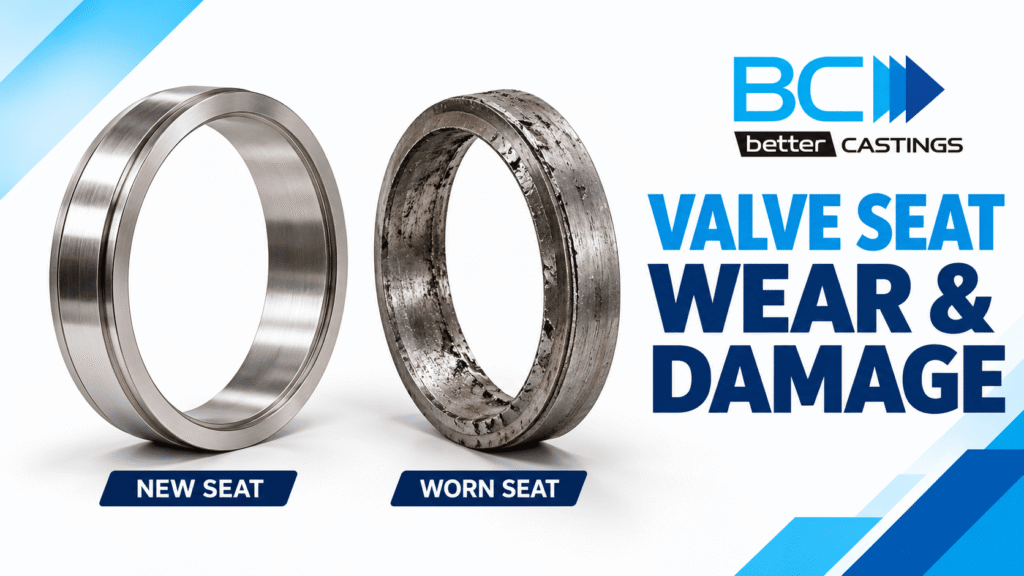
Dimensional errors can significantly affect sealing performance. Incorrect seating angles, poor surface finish, unsuitable hardness, or out-of-round geometry may create leakage paths or accelerate wear.
Material verification and inspection against the approved drawing help reduce the risk of manufacturing-related failures.
COMMON VALVE SEAT PROBLEMS AND HOW TO PREVENT THEM
| Symptom | Possible Cause | Recommended Action |
|---|---|---|
| Valve passes when fully closed | Damaged seat, trapped debris, incorrect closure, or actuator issue | Check the operating mechanism and inspect the seating surfaces |
| Grooves across the seating face | Erosion or high-velocity leakage | Identify the cause and evaluate the seat material and valve duty |
| Pitting or corrosion | Incompatible material or unsuitable process conditions | Review fluid compatibility and material selection |
| Galling or torn surfaces | Unsuitable material pairing or excessive contact stress | Review material combination, finish, and operating conditions |
| Soft seat is deformed | Temperature, pressure, or closing load exceeds design limits | Confirm the rating and evaluate a suitable alternative |
| Swollen or cracked elastomer | Chemical incompatibility or temperature exposure | Select an elastomer grade compatible with the service |
| Leakage around a seat ring | Damaged retention or sealing interface | Inspect the ring, pocket, and applicable seals |
| Scratches or embedded particles | Contamination or abrasive solids | Investigate contamination sources and assess suitable protection |
These symptoms indicate possible causes rather than definitive diagnoses. The valve design and service conditions determine the appropriate corrective action.
HOW CAN VALVE SEAT LEAKAGE BE DIAGNOSED?
In an operating plant, a passing valve may cause downstream pressure to rise unexpectedly or allow unwanted flow. The signs depend on the system and fluid.
A proper diagnosis should distinguish seat leakage from problems involving the actuator, stem, control system, or other valve components.
During workshop or factory testing, seat leakage is assessed using the test method and acceptance criteria specified for the valve.
API 598 covers inspection and testing requirements for several types of industrial valves. ANSI/FCI 70-2 defines leakage classes and test procedures for control valves. These standards serve different purposes, so the appropriate standard must be selected for the valve and application.
A field symptom alone does not establish compliance or non-compliance with a formal testing standard.
WHEN SHOULD A VALVE SEAT BE REPLACED?
Replacement or repair may be necessary when leakage exceeds the specified limit, inspection reveals unacceptable damage, or the material has been exposed to conditions outside its approved rating.
Renewable seat rings may be replaceable, while integral seats may require machining or another approved repair procedure. For critical equipment, maintenance teams should follow the plant’s inspection and shutdown procedures.
HOW DO YOU CHOOSE THE RIGHT VALVE SEAT?
Selecting a suitable valve seat requires a clear understanding of the valve, process, and required sealing performance.
STEP 1: IDENTIFY THE VALVE TYPE
Confirm whether the application uses a gate, globe, ball, check, butterfly, needle, or another valve type. Record the valve size, pressure class, design, and whether the seat is integral or replaceable.
STEP 2: DEFINE THE OPERATING CONDITIONS
Record normal and maximum operating pressure, differential pressure, and minimum and maximum temperatures.
Identify whether the valve is intended for isolation, throttling, or another duty. This distinction affects the expected wear and sealing requirements.
STEP 3: DEFINE THE SEALING REQUIREMENTS
Determine the acceptable leakage rate and the relevant test standard or classification. The specification may also include fire-safe, emissions, or other project-specific requirements.
Do not assume every valve uses the same acceptance criteria.
STEP 4: SELECT A COMPATIBLE MATERIAL
Evaluate the process fluid, temperature, pressure, corrosion risk, and potential for abrasive wear.
The seat and closure element must work together. Material hardness and surface characteristics should be selected to reduce the risk of galling and other forms of damage.
STEP 5: CONFIRM DIMENSIONS AND DOCUMENTATION
Before ordering, confirm the drawing revision, material grade, seating profile, tolerances, surface finish, hardness requirements, and inspection documentation.
For replacement components, verify the required dimensions against the approved drawing or valve specifications rather than relying only on a worn component.
STEP 6: DISCUSS THE REQUIREMENT WITH THE SUPPLIER
Share the valve details and operating conditions with the supplier before manufacturing begins. Confirm the proposed material, manufacturing route, inspection requirements, and documentation before approving the order.
VALVE SEAT SELECTION CHECKLIST
Before placing an order, confirm:
- Valve type, size, and pressure class
- Integral or renewable seat design
- Process fluid and relevant service conditions
- Normal and maximum operating pressure
- Minimum and maximum temperature
- Maximum differential pressure
- Isolation or throttling duty
- Required leakage performance and test standard
- Sour-service, fire-safe, or emissions requirements where applicable
- Seat material and required hardness
- Hard-facing or coating requirements, if applicable
- Approved drawing, tolerances, and surface finish
- Material certificates and inspection requirements
- Quantity and delivery schedule
VALVE SEAT MANUFACTURING AND QUALITY REQUIREMENTS
Quality requirements depend on the valve design, operating conditions, and customer specification.
MATERIAL TRACEABILITY
Material traceability connects a component to its material identification and supporting documentation.
Buyers may specify material test certificates or other records to verify chemical composition and mechanical properties. The required certificate type depends on the contract and applicable specification.
DIMENSIONAL ACCURACY AND SURFACE FINISH
Critical dimensions include the bore, outside diameter, seating angle, and relevant concentricity or runout requirements. These features influence how the closure element contacts the seat.
The seating face may have a tighter surface-finish requirement than other areas of the component. Inspection should confirm that the finished surface meets the drawing or approved specification.
HARDNESS AND NON-DESTRUCTIVE TESTING
Hardness requirements depend on the material, heat treatment, surface treatment, and intended service. Where sour-service requirements apply, the relevant specification may impose restrictions on material condition or hardness.
Non-destructive testing may be required to identify certain surface or internal defects without damaging the component. The appropriate method depends on the material, manufacturing route, component geometry, and inspection specification. Not every valve seat requires every NDT method.
APPLICABLE STANDARDS AND DOCUMENTATION
API 598 addresses inspection and testing for specified valve types. ANSI/FCI 70-2 addresses control valve seat leakage testing. Other standards may apply to valve design, materials, manufacturing, or pressure testing.
The purchaser and manufacturer should agree on the applicable standards, acceptance criteria, and document package before production. Records may include material certificates, dimensional inspection results, hardness results, and NDT reports where required.
VALVE SEATS FROM BETTER CASTINGS
Better Castings manufactures standard and custom valve seats for industrial requirements. Its published product information describes valve seats for new valve production and replacement applications.
The company identifies applications in high-pressure process valves, oil and gas production equipment, refineries, chemical plants, power generation, water and desalination systems, and industrial gas networks.
Material selection and component design should be confirmed against the requirements of the individual application. Providing complete technical details helps the supplier assess the requirement and prepare a more accurate quotation.
Visit the Better Castings Valve Seats product page to explore the available product information and submit an enquiry.
FREQUENTLY ASKED QUESTIONS ABOUT VALVE SEATS
What is a valve seat?
A valve seat is the sealing surface that contacts the valve’s closure element to control fluid flow. It helps prevent leakage when the valve is closed.
What is the main function of a valve seat?
A valve seat provides a sealing surface between the valve body and its closure element. It helps maintain shutoff performance under specified operating conditions.
What are the different types of valve seats?
Common types include integral, renewable, metal, soft polymer, elastomeric, and hard-faced seats. The suitable type depends on the valve design and operating requirements.
What materials are used to manufacture valve seats?
Valve seats can be manufactured from stainless steel, carbon steel, alloy steel, bronze, engineered polymers, and elastomers. Material selection depends on temperature, pressure, fluid compatibility, and wear conditions.
What is the difference between metal and soft valve seats?
Metal seats are often selected for demanding temperature and wear conditions. Soft seats can provide very low leakage in suitable applications but have material-specific operating limits.
What causes valve seat leakage?
Valve seat leakage can result from wear, corrosion, erosion, trapped debris, damaged sealing surfaces, or incorrect closure. The actual cause depends on the valve design and operating conditions.
How can valve seat life be extended?
Choose compatible materials, maintain suitable operating conditions, and inspect the sealing surfaces regularly. Preventing contamination and addressing abnormal wear can also help extend service life.
When should a valve seat be replaced?
A valve seat may need replacement when wear, deformation, corrosion, or damage affects its sealing performance. Inspection helps determine whether replacement or an appropriate repair is necessary.
What is the difference between integral and renewable valve seats?
An integral seat forms part of the valve body or its seating surface, while a renewable seat is designed to be replaced. Renewable seats can simplify maintenance when the valve design permits replacement.
How do I choose the right valve seat?
Consider the valve type, operating pressure, temperature, fluid composition, leakage requirements, and expected wear. Providing these details to the manufacturer helps identify a suitable seat design and material.
ABOUT THE AUTHOR
I’m Girish, an SEO content writer focused on creating clear, informative, and search-friendly content. I research industry-related topics and explain products, materials, manufacturing processes, and their applications in a simple, reader-friendly way. For Better Castings, I contribute content that helps engineers, buyers, and industry professionals understand industrial products and make informed decisions.
